How Much Does Attic Insulation Cost? (2026 Guide)
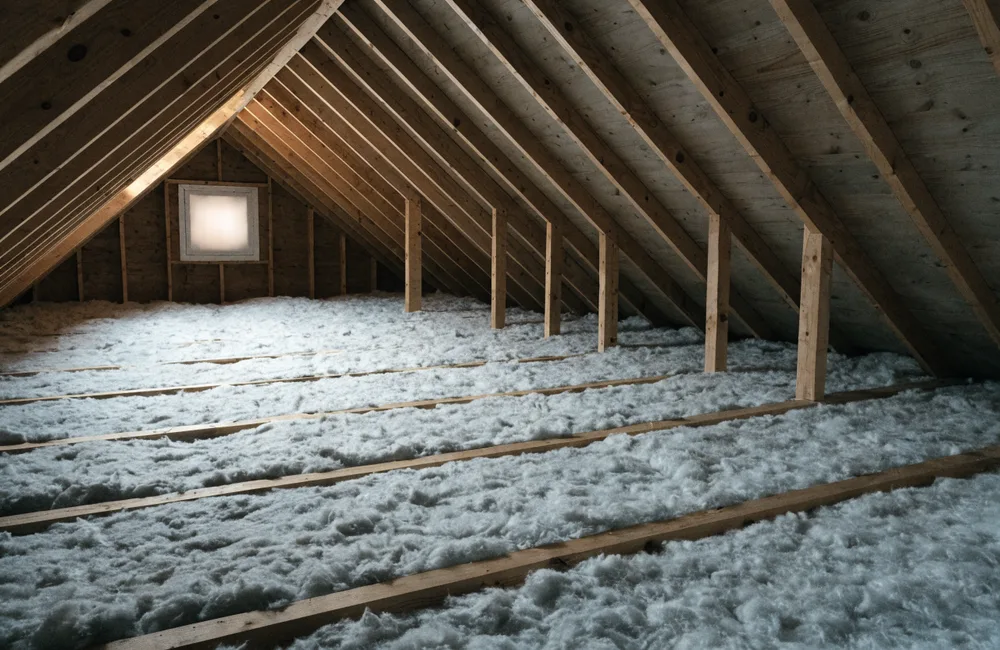
Blown-in attic insulation typically costs $900 to $3,600 for a whole attic, or about $0.90 to $2.40 per square foot, as of 2026. The real price driver is how far under today's Washington code minimum of R-60 your attic sits, plus the air sealing and access work Silverdale Roofing's own quote factors already cover.
Here is what moves that price up or down.
| What You're Pricing | Typical Cost (2026) |
|---|---|
| Blown-in attic insulation, whole attic (national) | $900 - $3,600 |
| Per square foot, blown-in installed (national) | $0.90 - $2.40/sq ft |
| Blown-in fiberglass, per sq ft | $0.50 - $1.10/sq ft |
| Blown-in cellulose, per sq ft (no air sealing) | $1.70 - $3.00/sq ft |
| Air sealing add-on | $250 - $750 |
| Old insulation removal, per sq ft | $1 - $1.50/sq ft |
These are national market ranges, not a Silverdale Roofing quote. Get a free written estimate and we will measure your attic and give you a real price before any work starts.
How Much Does Attic Insulation Cost?
Most whole-attic blown-in jobs cost $900 to $3,600 nationally in 2026, or about $0.90 to $2.40 per square foot installed. That is a wide range because the job itself varies a lot from attic to attic.
Silverdale Roofing prices every job the same honest way. We check four real things. Your attic's size and how hard it is to reach. How deep your current insulation is, compared to the target depth. How much air sealing the attic needs before new insulation goes in. Whether the job also needs new vent baffles, the channels that keep air moving under the roof, and other ventilation work.
We measure what is up there first. Then we give you one written price. If your attic is already close to target depth, we tell you that too. We do not sell you insulation you do not need.
What Insulation Level Does Washington Code Require Now?
Washington raised its attic insulation requirement from R-49 to R-60 under the 2021 Washington State Energy Code, effective statewide on July 1, 2023. R-60 is now the code minimum for most attics in new construction and many retrofits.
That change matters here because a lot of Kitsap County's housing is older. In Bremerton, 64 percent of homes were built before 1980. The median Bremerton home dates to 1969 (Census data). Homes insulated when they were built are very likely sitting at R-19, R-30, or R-38. That is well under today's R-60 target. Bringing an attic up to current code is a real, common reason the job costs more than a simple top-off. It is not an upsell.
Fiberglass or Cellulose: Which Blown-In Insulation Costs Less?
Material choice is the biggest lever on price. Blown-in fiberglass runs about $0.50 to $1.10 per square foot installed, making it the cheaper option. Blown-in cellulose runs about $1.70 to $3.00 per square foot without air sealing included.
Two add-ons show up often. Air sealing closes gaps around lights, pipes, and the attic hatch before new insulation goes in. That typically adds $250 to $750. Old insulation sometimes needs to come out first, if it has rodent damage or water damage. Removing it typically adds $1 to $1.50 per square foot. Both of these match what Silverdale Roofing already checks for on every quote: air sealing needs and insulation depth today versus the target.
Do You Need a Permit for Attic Insulation in Kitsap County?
Insulation work gets inspected. It is not a project you can just wave through on your own. In unincorporated Kitsap County, which covers Silverdale and Kingston, the county's own list of permit-exempt work covers finish work only. That means things like painting, papering, tiling, carpeting, cabinets, and countertops. Insulation is not on that list, and the typical energy code inspection sequence names insulation and air sealing as its own required step. Bremerton, Poulsbo, Port Orchard, and Bainbridge Island are their own cities, so a job there permits through that city's own department instead of the county, but the same rule applies: insulation is inspected work everywhere in Washington under the state energy code, not a permit-exempt finish job.
In practice, a licensed contractor already builds that permit and inspection step into the price. It is one more reason a box-store bag of loose-fill insulation and a rented blower is not the same job as a permitted, inspected install. The inspection is a real check, not paperwork for its own sake. It confirms the insulation actually meets the depth the job called for.
Is Attic Insulation Worth Adding During a Reroof?
Often, yes, and the timing saves you money. As Silverdale Roofing puts it: adding blown-in attic insulation during a roof job saves a separate trip, since the crew is already on site.
There is a roof-protection reason too, not just a scheduling one. Kitsap County gets about 56 inches of rain a year on average (NOAA data). Warm, damp air rises into a cold attic. If the attic is poorly insulated, that warm air is a major source of the moisture that quietly rots roof decking from below. Good insulation, paired with proper venting, keeps the attic drier. That protects the roof deck and framing your roof depends on.
If you are already planning a full roof replacement, adding insulation to that same visit is one of the more efficient upgrades you can make. Want to see what a full reroof costs in Kitsap County for comparison? That guide breaks down the full range.
More attic insulation also lowers energy bills in most homes. It holds heat in through Kitsap County's wet winters. Your furnace runs less. The house stays more even from room to room.
Silverdale Roofing installs blown-in attic insulation across Silverdale and Kitsap County. We are licensed, insured, and bonded in Washington State. Every job comes with a free written estimate before any work starts.
Schedule your free attic insulation estimate and we will tell you exactly where your attic stands and what it will take to get it there.
Talk to Silverdale Roofing
Questions about your roofing job? We serve Silverdale and the surrounding area with honest, upfront advice.
Related articles
FAQ
Related questions
How much insulation do I need in my attic?
Washington's current energy code calls for R-60 in most attics, which is about 16 to 20 inches of blown-in fiberglass or cellulose, depending on the material. Many older Kitsap County homes still have R-19 to R-38, laid down decades ago. We measure your actual depth first and tell you exactly how far you are from R-60 before we quote anything.
Does homeowners insurance cover attic insulation?
Usually not for a standard upgrade. Insurance typically only pays to replace insulation that was damaged by a covered event, like a roof leak or a fire, not to bring an attic up to a higher R-value. Check your own policy for the specific wording, since coverage varies by insurer.
How long does blown-in insulation last?
Fiberglass and cellulose insulation do not wear out on their own and can last 20 years or more if they stay dry. What shortens their life is moisture. Insulation that gets wet from a roof leak or poor attic ventilation loses its R-value and needs to be replaced, which is why we check your attic's moisture and ventilation, not just its depth.